
Marcus Montgomery
creative director and game design leader
DESCRIPTION
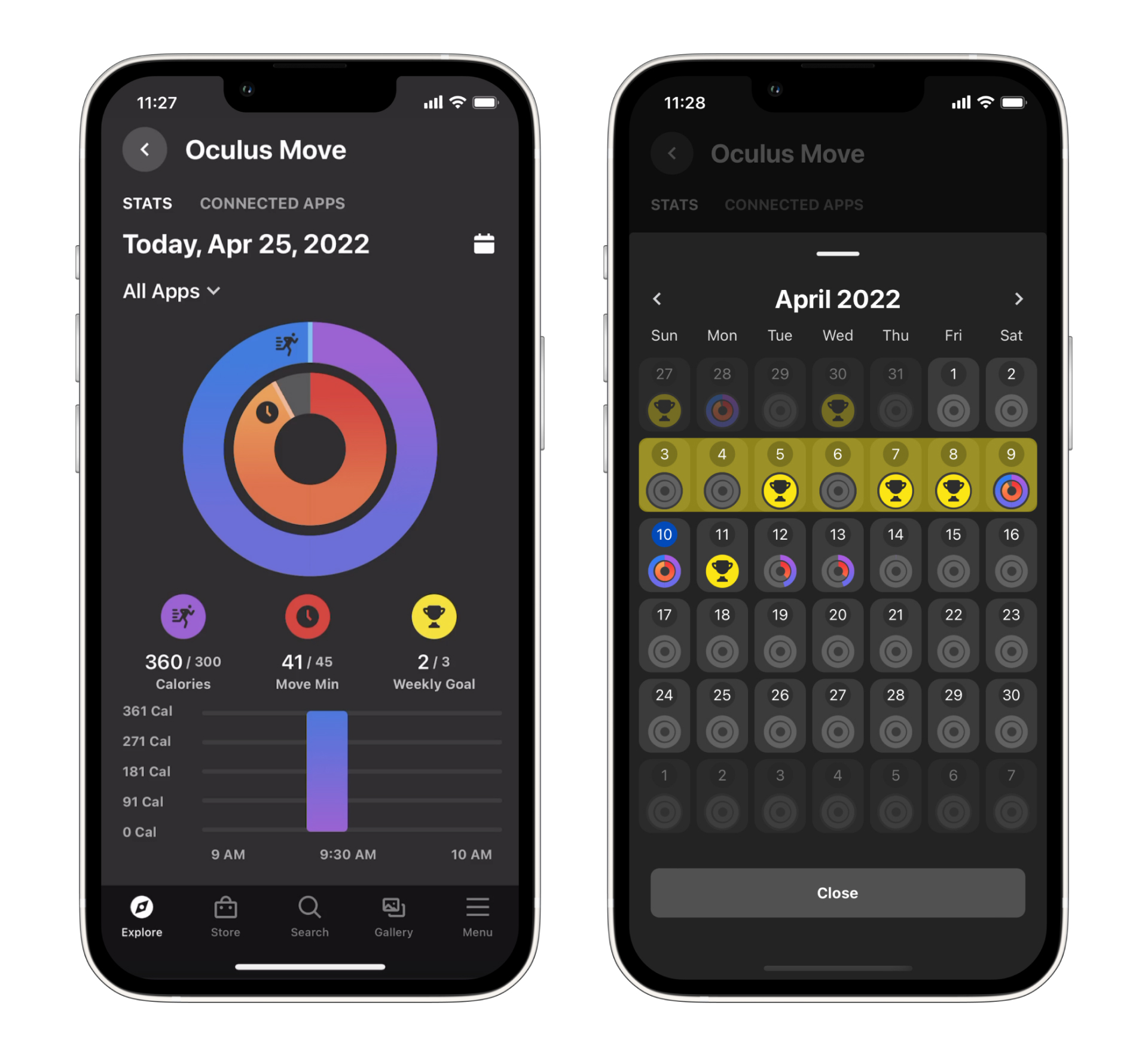
Oculus Move grew out of the virality of the VR fitness use case during the pandemic. We saw an opportunity to increase value and attachment to user through tracking their fitness effort when playing their VR games and fitness applications. Also, during this time privacy rules across the globe were shifting and hardening requiring careful attention to user information.
With a new use case brewing and the System Apps team needed a new project to focus the team less they be pulled off into other teams. At this point, as a product manager, a PRD (product requirement document) needed to be created and a larger case made to leadership to approve full investment into exploring the use case. And once approved, the focus would move to managing the team of engineers and a designer through the implementation of the product.
Product Management
As the Product Manager for the System Apps team, I developed strategy for the Fitness application along with one other Product Manager. I drafted the PRDS and roadmaps for the feature sets of the application. With the strategy set, I focused on features and execution.
Retention and Engagement
I put a strong emphasis on building healthy habits through consistency. Three core features supported these goals: Weekly Goals, Streaks, and Achievements.
- Weekly Goals allowed users to set how frequently they wanted to work out throughout the week and what caloric effort goals they wanted to reach.
- Streaks recognized your consistent completion of your weekly goals.
- Achievements were created as recognition of your lifetime workout effort. Additionally they were staged and spaced to ensure continued engagement for consistent workouts over time.
I worked closely with the product designer to streamline and improve, the new user experience, the layout of the calendar feature, and achievement icons. This also included cross function work with the product designer and the engineering staff to ensure the app supported a new upcoming feature of panel resizing within the headset (panel adaptability).
Lastly, I worked with our engineers on how best to implement progress notifications to the user. These notifications and nudges were meant to coax users into consistency healthy workouts over the week.
Policy, Privacy, and Legal
One of the core challenges was where to store the users personal information. Privacy laws had started to tighten across the globe. Our biggest goal was to maintain user trust and improve transparency as for out user data was stored. Where most of user information was stored on the Meta servers, this specific data was highly sensitive. So, all of the data needed to be stored on the headset itself.
Feedback we received from users indicated a desire to see their fitness activity on the Oculus mobile app. This required a new system to securely and safely sync the data across devices.
This required meeting with the internal policy, privacy groups and legal staff to ensure the architecture of the app secured this information properly. I reached out to other teams in the organization with similar issues challenges to identify key takeaways and problems to help guide our efforts.
Results
Team had lost key leadership prior to this initiative. My planning, communication, and attitude ensured development was calm, joyful, and delivered within our expected milestones. While I left before the full release of the Oculus Move app, the key result of my work was demonstrated through interactions of my cross-functional teams.
COMPANY
Meta(Oculus)
You must be logged in to post a comment.